Affiliate Disclosure:This article contains affiliate links. If you purchase through these links, we may earn a small commission at no extra cost to you. This helps support our research and content creation.
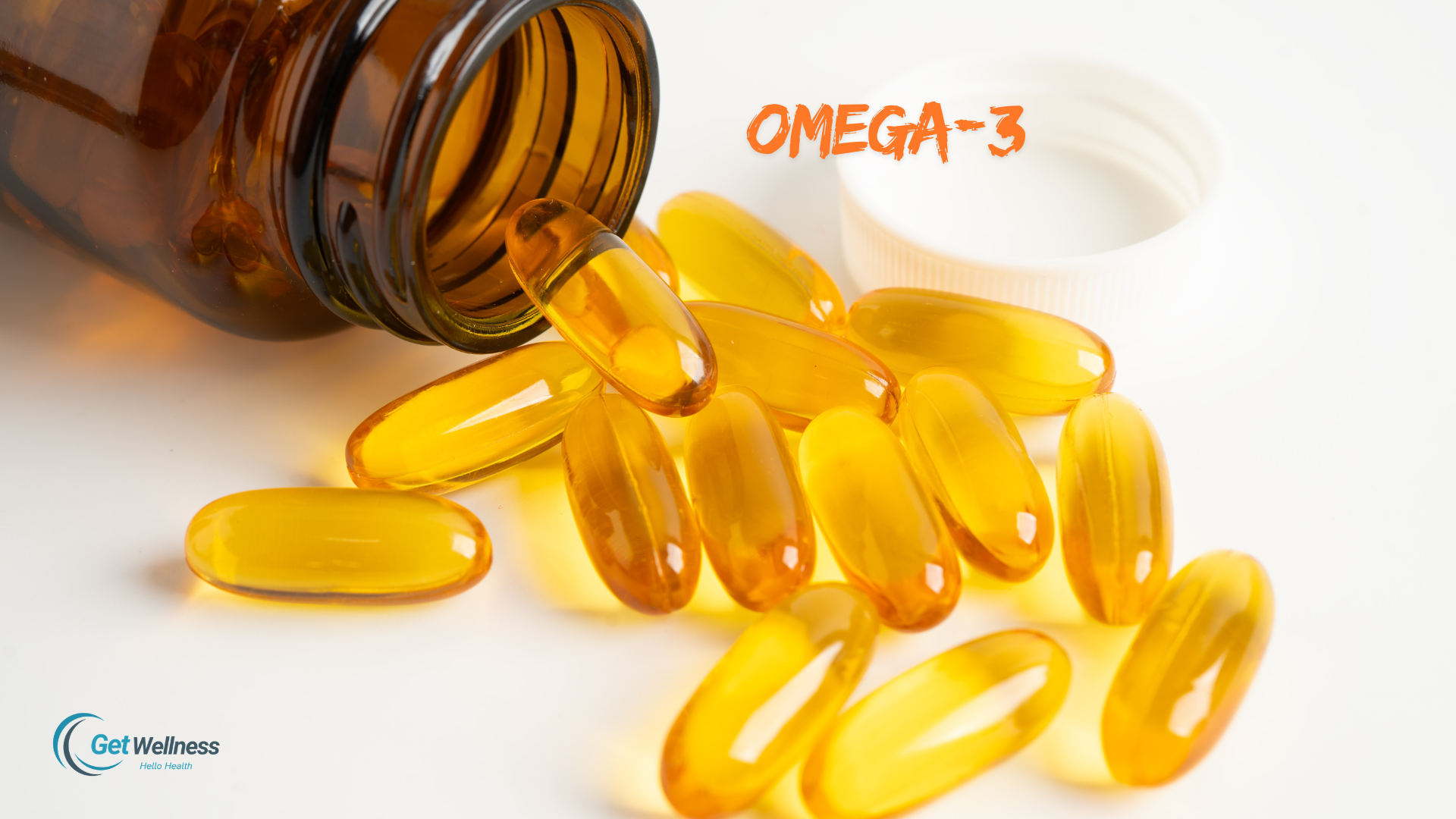
“The Omega-3 fish oil is a type of fatty acid found in both foods and the human body. There are three main types of omega-3s. EPA, DHA, and ALA”
Let's see, the three main omega-3 fatty acids are Eicosapentaenoic acid (EPA), Docosahexaenoic acid (DHA), and alpha-linoleic acid (ALA). EPA and DHA are especially very important for health and are mostly available in fatty fish like salmon, tuna, and mackerel. You can also get them from supplements.
ALA, or alpha-linoleic acid, is another type of omega-3 fatty acid. It is found in plant-based oils like soybean, flaxseed, and canola, as well as in seeds and nuts such as chia and walnuts.
Omega-3 fatty acids support several important aspects of our health. They help protect heart health, support brain function, and may help reduce inflammation in the body. Here’s how they help.
The Dietary Guidelines for America 2020-2025 suggest that eating a variety of seafood rich in omega-3 fatty acids at least once a week. For example, one serving (about 4 ounces) of cooked salmon, sardines, or mackerel provides a good amount of EPA and DHA. Other options include trout, herring, and anchovies. Including meals like grilled salmon, tuna salad, or baked trout can help you meet your omega-3 needs over the week. Both adults and children need omega-3 fatty acids to meet their nutritional needs.
There are several types of dietary supplements that contain omega-3 fatty acids. People may select different types of supplements based on real scenarios such as dietary preferences, allergies, knowledge or lifestyle. For example, those following a vegetarian or vegan diet probably prefer algal oil, while someone with a fish or shellfish allergy may seek plant-based options such as flaxseed oil. Others may consider specific nutrient content or added vitamins when selecting a supplement. Supplements alone not help also needed overall health read more on Paleo Diet
1. Fish oil supplements mainly provide DHA and EPA.
2. Fish liver oil supplements also contain DHA and EPA, as well as vitamins A and D.
3. Krill oil provides EPA and DHA in a phospholipid form.
4. The Algal oil is a good source of DHA and is suitable for vegetarians.
5. Flaxseed oil contains ALA (alpha-linoleic acid).
Role of Omega-3 in Stroke Prevention:
A review published in the AHA Stroke Journal looked at 183,291 adults over 14.3 years. The study measured blood levels of Eicosapentaenoic acid and Docosahexaenoic acid. The researchers found that people with higher blood levels of these omega-3s had a lower risk of stroke compared to those with lower levels. This suggests that regularly consuming foods or supplements rich in EPA and DHA may help reduce stroke risk.
|
|
|
|
|
If people Highest EPA levels |
17% Lower Risk |
18% Lower Risk |
|
If people Highest DHA Levels |
12% Lower Risk |
14% Lower Risk |
The omega-3 levels do not increase the risk of hemorrhage.
American Heart Association (AHA) Science Advisory:

The AHA science advisory indicates that omega-3 fatty acids may help reduce triglyceride levels. Typically, a dose of 4 grams per day is recommended; this dosage is generally well tolerated and has demonstrated efficacy in reducing triglycerides. Additionally, omega-3 fatty acids may reduce the risk of pancreatitis, more importantly, in patients with severe hypertriglyceridemia. The Large clinical trials, such as the REDUCE-IT Trial, have shown that EPA, a type of omega-3 fatty acid, can reduce major cardiovascular events in high-risk patients. Research shows that omega-3s really support heart health. But supplementation may not be sufficient for overall cardiovascular health. So, Food and dietary habits, lifestyle impacts on health. For more details also read Dash diet for Hypertension
Can Omega-3 Help with Depression? Scientific Evidence Explained
Not only cardiovascular health, but Omega-3 fatty acids have also attracted considerable attention in relation to depression, particularly within the fields of mental health and neurology. This article reviews significant studies across different verticals. It highlights that the potential mental health benefits of omega-3 fatty acids are primarily due to EPA and DHA. These fatty acids play clear roles in neurotransmission and in reducing neuron inflammation, which are key factors in the pathophysiology of depression. Many studies have resulted in supporting depression, which helps, and also the overall benefits. At the same time, some other clinical trials are not showing significant effects on depression. Therefore, the study evidence is mixed, suggesting that omega-3 fatty acids may support overall well-being and serve as a beneficial adjunct to conventional depression treatments, but are unlikely to be effective as a standalone therapy. This nuanced picture emphasizes the importance of combining omega-3 with established treatment strategies for optimal results.
A study referenced on Science Direct investigated the effects of omega-3 supplementation in 32 children aged 6 to 14 years who were selected and diagnosed with ADHD at a hospital in Israel. Parental consent with agreement was obtained prior to participation. Study findings showed that
baseline fatty acid levels were measured before the intervention, and erythrocyte membrane samples were collected again after 3 to 6 months of supplementation. ADHD symptoms were evaluated using the ADHD Rating Scale with input from both teachers and parents. The study reported promising findings: omega-3 supplementation was associated with improved fatty acid profiles and a beneficial effect on ADHD symptoms.
Omega-3 fatty acids' effect on rheumatoid arthritis:

Let's see the Database of Abstracts of Reviews of Effects. This article reports randomized controlled trials of omega-3 fatty acids for rheumatoid arthritis. In this study, the duration is more than 3 months, and the omega-3 fatty acid dosage is above 2.7 g/day. In this study, the selection criteria were 183 patients with rheumatoid arthritis and 187 people who received a placebo. After 3 months, it reduced the effect of NSAID medication consumption.
Omega-3 fatty acids may not replace the medication for rheumatoid arthritis, but they may reduce the severity and effectiveness. Those who are long-term dependent on painkillers and who use them frequently may reduce their usage. It also helps reduce inflammation.
This short review article does not provide direct support; it is educational in nature; we are not providing clinical advice. For any clinical or medical information, contact an HCP.
In conclusion, while omega-3 supplementation demonstrates potential health benefits across a range of conditions, individuals should select products based on evidence-based criteria such as purity, dosage, and the specific EPA and DHA content. Given the diversity of formulation availability, it is essential to consult reputable sources and healthcare professionals to determine the most suitable omega-3 supplement. By considering these factors, individuals can make informed decisions regarding the optimal omega-3 capsules to support their health needs.
Quick Comparison Table:
|
Brand |
EPA |
DHA |
Total EPA+DHA |
Capsules |
Special Feature |
Best For |
|
|
1 |
Tata 1mg Salmon Omega-3 |
180 mg |
120 mg |
300 mg |
120 |
Triglyceride form |
Daily maintenance |
|
2 |
Sports Research Omega-3 |
High potency |
High potency |
Premium dose |
90 |
IFOS 5-Star |
Quality-focused buyers |
|
3 |
Neuherbs Deep Sea |
892 mg |
594 mg |
1486 mg |
60 |
Triple strength + D3 |
High-dose support |
|
4 |
TrueBasics Omega-3 |
525 mg |
375 mg |
900 mg |
60 |
Enteric coated |
No fishy burps |
1. Tata 1mg Salmon Omega-3 (120 Capsules):
If you are new to choosing omega-3 supplements and feel confused, this is a good option. It supports brain and heart health, making it suitable for you. Let's take a closer look. You get good value with 120 capsules in each bottle. This is not a high-strength formula. For context, the World Health Organization (WHO) recommends a daily intake of 250–500 mg of combined EPA and DHA for healthy adults. Tata 1mg Salmon Omega-3 provides a moderate amount suited to these general wellness guidelines, making it a reliable choice for long-term, everyday supplementation rather than higher medical doses.
Check the latest price on Amazon.
2. Sports Research Omega-3 (Wild Alaskan):
If you want global trust and credibility, this is best for you.
Why is it best for you?
a) It has IFOS 5- star
b) Good customer rating
c) Triglycerides form helps to improve absorption
If you're looking for the best branding, good credibility, and good quality, and if price does not matter for you
Best for: People serious about supplement quality, let’s see the current price & reviews.
Check the latest price on Amazon.
3. Neuherbs Deep Sea Omega-3 (Triple Strength):
Best high-strength option, this is a good formula if you focus on EPA and DHA.
1. In sports research omega-3 , EPA-892 mg + DHA 594 mg
2. Total : 1486 mg per serving 2 soft gels
3. It also contains Vitamin D3
It has a lemon flavor and reduces fishy burps.
If your goal is:
1. Joint support
2. Higher triglyceride management support
3. More intensive omega supplementation
Best for: High-dose omega users
Check the latest price on Amazon
4. TrueBasics Omega-3 Best for Sensitive Stomach / No Fishy Aftertaste:
What makes this different is:
· Enteric coating (dissolves in the intestine)
· Molecular distillation for heavy metal removal
· Heavy metal removal by molecular distillation
· Clean Label certification
EPA 525 mg + DHA 375 mg = 900 mg total per serving
Good middle-ground option: Stronger than basic fish oil but not as extreme as triple strength.
Best for: People who hate fishy burps
Check the latest price on Amazon
Medical Disclaimer: The information provided in this article is for educational and knowledge purposes only and is not for medical advice. Perhaps omega-3 supplements aren't suitable for everyone. Please consult a well-qualified healthcare professional before you start any supplement, especially if you are pregnant, nursing, taking medication (such as blood thinners), or have a medical condition.
The products reviewed in this article were selected independently based on publicly available information, ingredient labels, and customer reviews. We do not receive payment from brands for positive reviews.
Reference:
1. Ivana Djuricic 1, Philip C Calder, N-3 Fatty Acids (EPA and DHA) and Cardiovascular Health - Updated Review of Mechanisms and Clinical Outcomes, Curr Atheroscler Rep. 2025 Nov 17;27(1):116. doi: 10.1007/s11883-025-01363-2
2. MichalinaBanaszak,MałgorzataDobrzyńska, Role of Omega-3 fatty acids eicosapentaenoic (EPA) and docosahexaenoic (DHA) as modulatory and anti-inflammatory agents in noncommunicable diet-related diseases – Reports from the last 10 years, https://doi.org/10.1016/j.clnesp.2024.06.053
3. Philip C Calder, Abbie L Cawood, An overview of national and international long chain omega-3 polyunsaturated fatty acid intake recommendations for healthy populations, PMID: 41277237, DOI: 10.1017/S0954422425100279, Nutr Res Rev, 2025 Nov 24:39:e6
4. Maria Inês Barros, Teresa Brandão, Omega-3 Polyunsaturated Fatty Acids and Cognitive Decline in Adults with Non-Dementia or Mild Cognitive Impairment: An Overview of Systematic Reviews, Nutrients, 2025 Sep 19;17(18):3002, doi: 10.3390/nu17183002.
5. Hossein Shahinfar, Zahra Yazdian, A systematic review and dose response meta analysis of Omega 3 supplementation on cognitive function, Open access, Published: 20 August 2025.
6. Marco Zeppieri, Caterina Gagliano, Eicosapentaenoic Acid (EPA) and Docosahexaenoic Acid (DHA): A Targeted Antioxidant Strategy to Counter Oxidative Stress in Retinopathy, Antioxidants (Basel), 2024 Dec 24;14(1):6, doi: 10.3390/antiox14010006.
7. Nada R Abuknesha, James H O'Keefe, Effects of Omega-3 Fatty Acid Treatment on Risk for Atrial Fibrillation: An Updated Meta-Analysis of 34 Trials including 114,326 Individuals, medRxiv, 2025 Dec 15:2025.12.14.25342167, doi: 10.64898/2025.12.14.25342167.
8. Deepak L Bhatt, P Gabriel Steg, Cardiovascular Risk Reduction with Icosapent Ethyl for Hypertriglyceridemia, N Engl J Med, 2019 Jan 3;380(1):11-22, doi: 10.1056/NEJMoa1812792. Epub 2018 Nov 10.
9. Mitsuhiro Yokoyama, Hideki Origasa, Effects of eicosapentaenoic acid on major coronary events in hypercholesterolaemic patients (JELIS): a randomised open-label, blinded endpoint analysis,n Lancet, 2007 Mar 31;369(9567):1090-8, doi: 10.1016/S0140-6736(07)60527-3.
10. Matthew J Budoff, Deepak L Bhatt, Effect of icosapent ethyl on progression of coronary atherosclerosis in patients with elevated triglycerides on statin therapy: final results of the EVAPORATE trial, Eur Heart J, 2020 Oct 21;41(40):3925-3932, doi: 10.1093/eurheartj/ehaa652.
11. Dietary supplementation with n-3 polyunsaturated fatty acids and vitamin E after myocardial infarction: results of the GISSI-Prevenzione trial. Gruppo Italiano per lo Studio della Sopravvivenza nell'Infarto miocardico, Lancet, 1999 Aug 7;354(9177):447-55.
12. John J P Kastelein, Kevin C Maki, Omega-3 free fatty acids for the treatment of severe hypertriglyceridemia: the EpanoVa fOr Lowering Very high triglyceridEs (EVOLVE) trial, J Clin Lipidol, 2014 Jan-Feb;8(1):94-106, doi: 10.1016/j.jacl.2013.10.003. Epub 2013 Oct 14.