Affiliate Disclosure: This article may contain affiliate links. If you purchase through these links, we may earn a small commission at no extra cost to you. This helps support our research and content creation.
“Learn the importance of dietary fibre, its top food sources, and how it supports digestion, weight management, and chronic disease prevention
Introduction
Fibre is also a type of carbohydrate, and it supports overall health. Its role in overall health is crucial, particularly in the management of chronic diseases. We should know The Importance of dietary fibre and its sources. Dietary fibre is what we obtain from different plant sources, specifically from the indigestible parts of these sources. Our digestive system cannot break them down. As you know, Carbohydrates generally break down into smaller sugars that provide us with energy. But fibres cannot break down. These fibres move through the small intestine and large intestine without change. This fibre interacts with prebiotics and helps maintain digestive health. This fibre helps to reduce weight, and it also aids in mimicking the impact of chronic diseases.
Understanding Dietary Fibre:
Dietary fibres are those that are not digested by human
digestive enzymes. To understand the Importance of dietary fibre and its
sources. The sciences have developed concepts of the importance of fibres and
their role.
Soluble Fibre: To make the gel-like material dissolve in
water. This is to aid in reducing blood cholesterol and the glucose range.
Examples of soluble fibres are oats, beans, apples, citrus fruits, and barley.
Insoluble Fibre: To increase stool formation in the colon,
insoluble fibre is needed for a smooth walk out and easy movement of stools.
So, it helps those struggling with constipation and irregular stools. Examples
are whole wheat, wheat bran, beans, nuts, fruits and vegetables, and many
sources are available for insoluble fibres.

Figure 2 Fiber intake helps relieve constipation by improving bowel
movements and gut health
Both types of fibre
are essential for health, each serving distinct functions and offering unique
health benefits.
Key Benefits of Dietary Fibre
Daily consumption of
fibre is more beneficial and has many advantages in managing many diseases.
Digestive Health: Fibre increases stool bulk and helps to
prevent constipation by softening stools and making them easier to pass. It
also normalises bowel movements, which are crucial for expelling waste and
toxins from the body.
Cholesterol
Reduction: The soluble fibre
has been proven to reduce the cholesterol level by minimising LDL levels or bad
cholesterol. This might help lower the risk of heart disease.
Blood Sugar
Control: Fibre, particularly
soluble fibre. To understand the Importance of dietary fibre and its sources.
It helps to slow down the absorption of glucose and helps to manage sugar
levels—this is a good advantage in managing diabetes.
Heart Health: If you have a good consumption of a lot more
fibre or rich sources of food items, having fibre helps to reduce the progression
of coronary diseases and heart diseases
Weight Management
and Satiety: High-fibre foods
are more filling than low-fibre foods, which helps control appetite and may
contribute to weight management. Fibre's ability to absorb water adds bulk to
the diet, making you feel fuller for a longer period.

Figure 3 Dietary fiber promotes satiety, aiding in natural and sustainable
weight loss.
Cancer Prevention: There is growing evidence that consuming a
diet or meal plan with good availability of fibre helps to control the risk of
colorectal abnormalities and cancer. Some fibres are fermented in the colon,
producing short-chain fatty acids that scientists believe may help protect
against certain types of cancer.
Rich Sources of Dietary Fibre
We require good
sources of fibre in our dietary plan. It's good to know where we get the right
source of fibre. Some examples are here.
Fruits and
Vegetables: Generally, some
fruits and vegetables have high fibre content, especially when consumed with
the skin. Apples, bananas, oranges, strawberries, raspberries, artichokes,
carrots, and broccoli are excellent choices.
Legumes, including
beans, lentils, chickpeas, and
peas, are significant sources of both soluble and insoluble fibre.
Nuts and Seeds: Almonds, flaxseeds, chia seeds, and sunflower
seeds add crunch and fibre to your diet.
Whole Grains: Select to have some special whole grain food
products instead of refined whole grains. List your diet. Options like whole
wheat bread, barley, quinoa, and oats are not only nutritious but also high in
fibre.
Tubers, such as
root vegetables like potatoes,
sweet potatoes, and carrots, especially when eaten with their skins, provide a
good amount of fibre.
Incorporating Fibre into Your Diet
Here are some
practical ways to increase your fibre intake:
Start with
Breakfast: Start your day with
breakfast with more high-quality, rich fibre on your plate and approximately
5-10 grams of fibre in your diet per serving. Alternatively, opt for a bowl of
oatmeal topped with fruit.
Whole Grains: Replace white rice, bread, and pasta with
whole-grain alternatives. Try incorporating ancient grains, such as quinoa or
freekeh, into your meals for a nutritious boost.
Snack on Fibre: For snacks, opt for raw vegetables, nuts, or
fruit instead of chips or candy.
Beans and Legumes: Incorporate beans into your meals at least
several times a week. And it can also be part of our salads and soups. It
increases the fibre content more.
Fibre Supplements: To get enough fibre in your diet or meal plan,
meet with your nutritionist or dietician for better advice. However, obtaining
fibre from foods is preferable because supplements don't provide a variety of
fibres; along with fibre, they also need multivitamins and minerals for
balanced nutrition and overall health benefits.
Conclusion
The importance of dietary fibre extends far beyond just preventing constipation. daily habit of consumption helps to manage many diseases and disorders.
Best suggestions for you
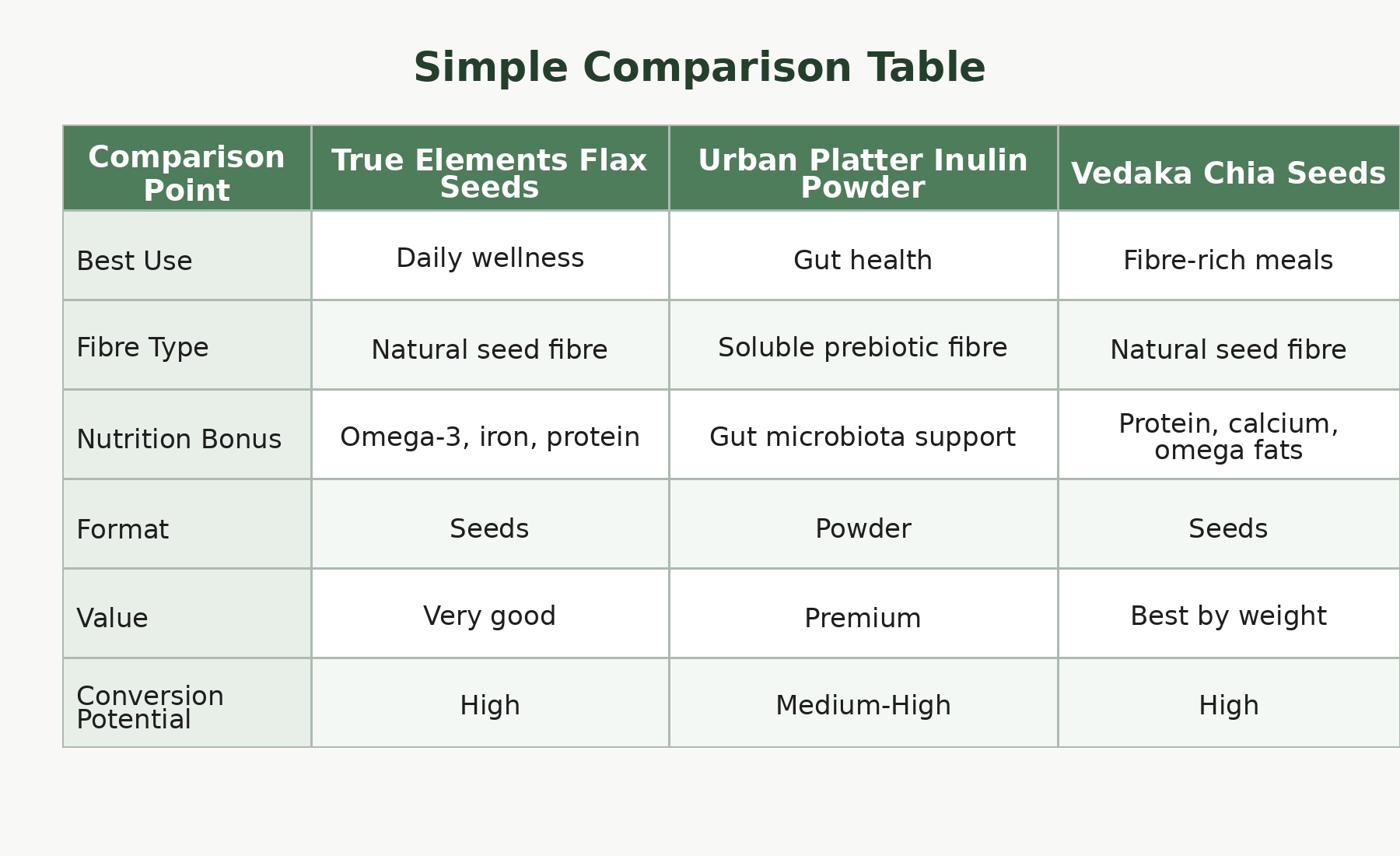
· Choose if you look for best overall product True Elements Flax Seeds 500g, daily-use product with good fibre content, good confidence, and versatile use in meals. Buy on Amazon
· Choose if you look for best for gut health Urban Platter Inulin Powder 300g, this if your focus is on prebiotic fibre, digestive balance, and supporting the gut microbiome. Buy on Amazon
· Choose if you look for best and budget option for bulk Vedaka Chia Seeds 1Kg, this if you want a larger quantity at a lower cost prefer. Buy on Amazon
Note: Our content is created for educational and informational purposes only and should not be considered medical advice, diagnosis, or treatment. Always consult a qualified healthcare professional before starting any supplement, medicine, or wellness product.
References:
1.
Thomas M.
Barber, Stefan Kabisch, The Health Benefits of Dietary Fibre, Nutrients. 2020
Oct 21;12(10):3209. doi: 10.3390/nu12103209.
2.
James W
Anderson, Pat Baird, Richard H Davis Jr, Health benefits of dietary fibre, Nutr
Rev, 2009 Apr;67(4):188-205, doi: 10.1111/j.1753-4887.2009.00189.x.
3.
Ifrah
Fatima, Imali Gamage, Reuben Joaquim Ricardo De Almeida, Current Understanding
of Dietary Fibre and Its Role in Chronic Diseases, Mo Med. 2023
Sep-Oct;120(5):381–388.
4.
Nicola Veronese, Marco Solmi,
Maria Gabriella Caruso, Dietary fiber and health outcomes: an umbrella review
of systematic reviews and meta-analyses, Am J Clin Nutr, 2018 Mar 1;107(3):436-444, doi:
10.1093/ajcn/nqx082.
5.
William J
Bulsiewicz, The Importance of Dietary Fiber for Metabolic Health, Am J
Lifestyle Med, 2023 Apr 12;17(5):639-648, doi: 10.1177/15598276231167778.
eCollection 2023 Sep-Oct.