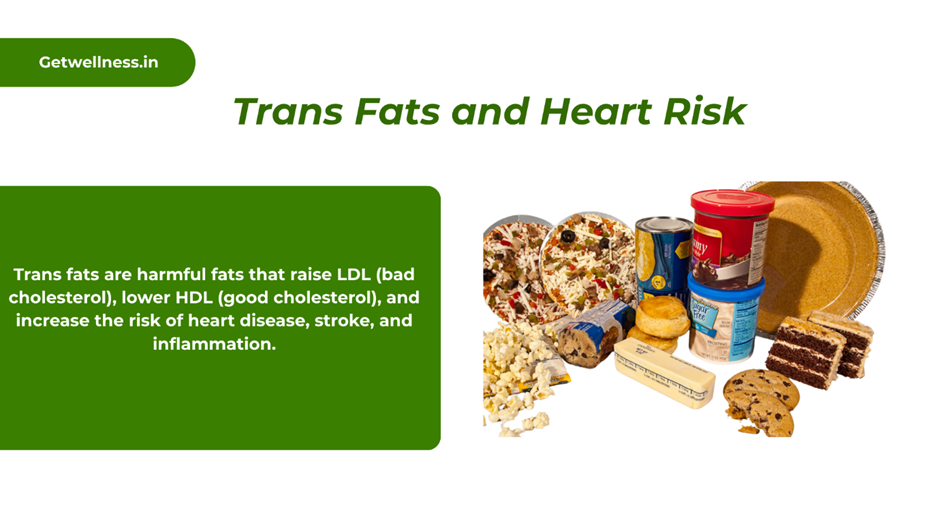
Figure 1 Illustration showing the link between trans fats and increased heart disease risk due to cholesterol imbalance foods.
Trans Fats:
We need to understand fats. What Foods Have Trans Fat? Trans fats are dangerous to health. Trans fats can be produced through manufacturing in industries and are also available through natural processes, albeit in smaller quantities. Industrially processed oils are not healthy. They are prepared with vegetable oils and processed with hydrogen. This process is called the hydrogenation process.
You know, trans fats are unhealthy. The natural process of
trans fats is somewhat beneficial but not entirely healthy; however, they are
generally considered healthy. Where will we get them? We get them from milk and
animal sources. You know trans fats cause increased LDLs and decreased HDL
levels, and because of this, there is an increased risk of high cholesterol. These
increased trans fats in the body are responsible for diabetes, cardiovascular disorders,
strokes, etc.
The World Health Organisation aims to eradicate trans fats
in our diets. Because it shows many complications in overall health. WHO is
making recommendations, and awareness has been raised with guidelines. The fact
is that many countries have issued local guidelines on trans-fat usage.
Therefore, many countries, along with their health authorities, are required to
implement quick action plans to protect public health. What Foods Have Trans
Fat? Even some natural trans fats are also available, and they are not
dangerous to health.
A significant amount of research has been conducted on trans
fats and their proven impact on health. The hydrogenation process is the key
source of trans fats... People widely use trans fats because they are a
low-cost option. Several items we buy outside contain trans fats, but we
weren't aware of their severity. The reason is that we didn't go through the
label package instructions.
A lot of health problems arise with the usage of trans fats,
like obesity, diabetes, cardiovascular disorders, dementia, Alzheimer's, etc.
These trans fats damage cellular organelles and cause inflammation and
atherosclerosis in the vascular area. Trans fats alter the metabolic functions
of the ulnar level organelles. They are widely available.
Example:
- Street
foods like fried chicken, noodles, and onion rings
- The
bakery also has foods like doughnuts, pastries and cookies
- Also,
salty chips, high-sugar energy bars and frozen food items
Before dining, kindly check the packaged labels on food
items, as they will be labelled with information about various kinds of fats.
Saturated Fats:
This saturated fat originates from two sources: animal-based
and plant-based sources. When we observe the chemical structure, we can observe
some differences between saturated and unsaturated fats. They do not have
double bonds in their chemical structure. Mostly, we will get them from natural
sources. At room temperature, they will become a solid state. Available in
butter, cheese, and red meat, all of which are animal-based. Coconut oils and
palm oils are available from plant sources. If an individual has higher levels
of saturated fats (SFA), it can lead to dyslipidaemia and other cardiovascular disorders.
Identified that high usage of SFA can increase LDL levels.
Red Meat has a high availability of saturated fats,
especially when it is available from beef and pork. Dairy items also come from
animal sources. Dairy items are widely available to us, including items like
cheese and butter. We will obtain them from natural sources without further
modification of saturated fats. Other sources also include plant-based items,
such as coconut oil and palm oil. I am aware that eggs are rich in nutrients,
and egg yolk, in particular, is a good natural source of saturated fats. Any
sources of saturated fat are needed for proper metabolic functions.
Saturated
fats (SF) are found in dairy items, and young adults obtain them from
saturated fats (SF) in meat. Consumption of saturated fats depends on age,
demographic areas and cultural differences.
Reality on saturated fats:
Overconsumption of single sources of saturated
fats does not make sense. The body requires multiple sources of saturated
fats and various types of fats for optimal metabolic functions. The difference:
What Foods Have Trans Fats. Identification is important.
Suppose you take lower and higher amounts of dietary habits.
This led to dietary imbalance. Suppose you lower the fats and automatically
increase the carbohydrates. This causes an imbalance in dietary intake. This
may occur and could lead to increased weight gain and an imbalance in LDL and
HDL levels.

Figure 2 HDL
supports heart health by clearing excess cholesterol, while LDL contributes to
plaque buildup — balance is key.
This strategic approach, which involves consuming different
types of fats and other sources of fat, has the potential to impact our overall
health. A great deal of research has been conducted on saturated fats. How to
manage the issue of having balanced fats. Equal and balanced fats will help us
maintain a healthy diet. Many researchers suggest that saturated fats are also
a contributing factor to cardiovascular problems; however, a balanced and
multi-source intake of saturated fats can help us mitigate adverse events. The
fact is that using the right saturated fats helps adjust both LDL and HDL
levels equally. For this reason, overconsumption occurs when we do not have an
understanding of the right fats, which can cause problems. Another fact is that
overconsumption of fats also leads to weight gain, specifically fat deposition.

Figure 3 A graphic
showing unhealthy fats and their connection to clogged arteries and heart
disease.
Concern and selection of Saturated fats
Pick the packaged
items and observe the labelling. They will mention the percentage of saturated
and unsaturated fats in the composition. We need to reduce our intake of
saturated fats and avoid industrial processed food items.
Unsaturated Fats
Along with saturated fats, unsaturated fats are also
essential for our health. These unsaturated fats have one or multiple double
bonds in their chemical structure. Unsaturated
fats are good for health. As discussed, saturated fats do not contain
double bonds in their structure. They are stable at room temperature. For
health reasons, we need saturated fats and unsaturated fats. Another use
of polyunsaturated fats is that they reduce tissue inflammation
There are two kinds of unsaturated fats:
- Monounsaturated
fats (MUFAs): Mono means one, and unsaturated fats in their chemical
structure have one double bond. This is available in olive oil and
avocados. These Monounsaturated fats are healthy for the heart. MUFAs
reduce bad cholesterol.
- Polyunsaturated
fats (PUFAs): These polyunsaturated fats have double bonds in their
chemical structure. The chemical structure differs from that of MUFAs.
These are essential fatty acids: omega-3 fatty acids and omega-6 fatty
acids. In fish, especially salmon, omega-3 fatty acids are a good source,
and soybean oil is rich in omega-6 fatty acids
References:
1. Antwi-Boasiako Oteng, Sander
Kersten, Mechanisms of Action of trans Fatty Acids, Adv Nutr, 2020 May
1;11(3):697-708. doi: 10.1093/advances/nmz125.
2.
Edwina A Wambogo , Nicholas Ansai, Dairy,
Meat, Seafood, and Plant Sources of Saturated Fat: United States, Ages Two
Years and Over, 2017-2020, J Nutr, 2023
Sep;153(9):2689-2698, doi: 10.1016/j.tjnut.2023.06.040. Epub 2023
Jul 5.
3.
Kevin C Maki 1, Mary R Dicklin, Saturated
fats and cardiovascular health: Current evidence and controversies,J Clin Lipidol,2021 Nov-Dec;15(6):765-772 doi: 10.1016/j.jacl.2021.09.049. Epub 2021
Oct 1.
4. Edwina A Wambogo 1, Nicholas Ansai, Dairy, Meat, Seafood, and Plant
Sources of Saturated Fat: United States, Ages Two Years and Over, 2017-2020, J
Nutr, 2023 Sep;153(9):2689-2698,doi:
10.1016/j.tjnut.2023.06.040. Epub 2023 Jul 5.
5.
J Bruce German 1, Cora J Dillard,
Satu, Am J Clin Nutr, 2004 Sep;80(3):550-9, doi: 10.1093/ajcn/80.3.550.rated
fats: what dietary intake?.
Salvatore Coniglio 1, Maria Shumskaya , Unsaturated Fatty Acids and Their Im munomodulatory Properties, Biology (Basel). 2023 Feb 9;12(2):279. doi: 10.3390/biology12020279