Introduction:
Micronutrients are different from macronutrients because macronutrients are proteins, fats, and carbohydrates. Humans will eat them in large quantities, providing energy in calories. Macronutrients contribute to the structural benefits and other functions. Whereas the micronutrients are in smaller amounts and humans will take them in smaller quantities in their diet, the source of micronutrients is vegetables and fruits. Micronutrients help to provide the metabolic function of vital functions in the body for different organs; both are required for smooth physiological functions, and a deficiency of any of them leads to disease or disorders.
About Micronutrients?
Pure Micronutrients are further divided into two main categories: minerals and vitamins. These nutrients are essential for growth, disease or disorder prevention, and overall health and well-being. Vitamins are sourced from organic compounds produced by animals and plants and can be synthesised by Acid, air, and heat. On the other hand, minerals are sourced from inorganic sources like water or soil, absorbed by trees or eaten by animals and humans. These minerals and multivitamins are often depleted because of the unavailability in the diet or neglect by the individual. This depletion will cause the disease or disorder of the deficiency. For this reason, nutrients are needed in supplementation to replace depletion faster. Also read more about Macronutrients
Functions of Vitamins
As discussed, vitamins are sourced from organic sources and are essential for cellular function and metabolism. These functions include energy production, enhanced immune function, and other vital bodily processes. A total of 13 different essential vitamins are available. Pure Micronutrients.
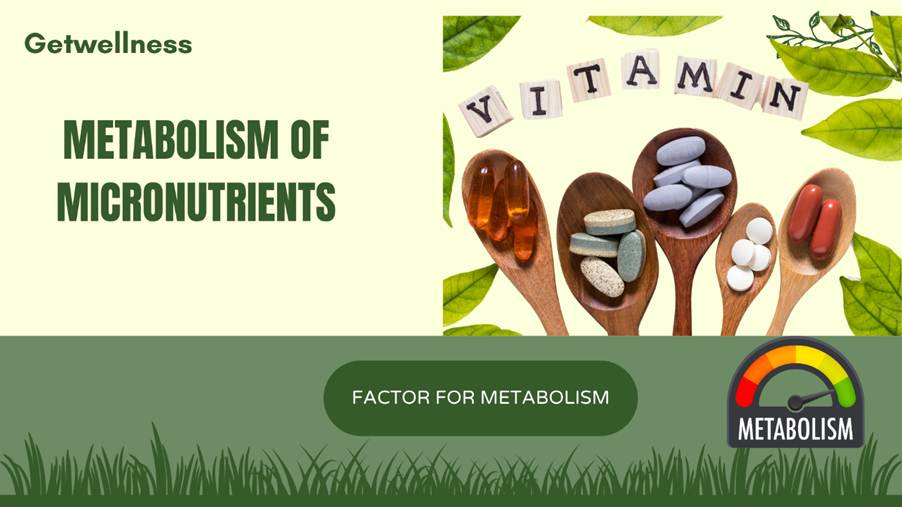
Figure 2
Vitamin A: Helps to improve vision and dermal health, immunity, and metabolic function.
Vitamin C: It is also an antioxidant that helps to repair tissues from oxidative stress. It is also vital for the absorption of Iron. Read more about Antioxidants
Vitamin D: This is also called the sunshine vitamin. It is obtained from UV B rays and other sources. It increases the calcium in the intestine and helps to improve immunity.
Vitamin E: It is another antioxidant that also enhances skin health and vitality.
Vitamin K: It is another coagulation factor with specialized properties that maintain bone metabolism.
Vitamins are a B-Complex set of vitamins; these are more involved in cellular function to maintain and help the DNA function.
The functions of Minerals
The pure micronutrients help to improve the metabolism. As discussed earlier, minerals are vital for cellular metabolic function. Then, after some essential minerals, I will discuss them here; please check. These minerals are all from inorganic sources, sourced from water and soil. We cannot get them directly; we get them from plant sources.
Calcium and phosphorus: These are essential for healthier teeth and bones.
Magnesium: Magnesium is another mineral that plays a vital role in approx. 300 enzymatic metabolic reactions and nerve, cellular, muscle, and nerve functions.
Iron: Iron is essential for them to produce haemoglobin; as you know, Iron carries oxygen
Zinc: This zinc is essential for immunity support and faster wound healing and also helps in DNS synthesis
Origins of Micronutrients:
A balanced diet helps your health; generally, we get it from vegetables, fruits, and dairy items, and fresh fruits and vegetables provide good micronutrients. Nutrient absorption decreases as age increases, but a healthy lifestyle can affect good nutrient absorption.
Fresh vegetables and fresh fruits are good sources of vitamin S, like Vitamin C and Vitamin A
Whole grains are available abundantly, but they are rich in Vitamin B-Complexes
commonly available for us are Dairy products, among which milk Is essential; another source Is calcium and vitamin D
eat is a favourite for most people, meat available Vitamin B-Complexes, and other minerals will be available, and from seafood omega, DHA is abundantly available. Also read more about Omega-3
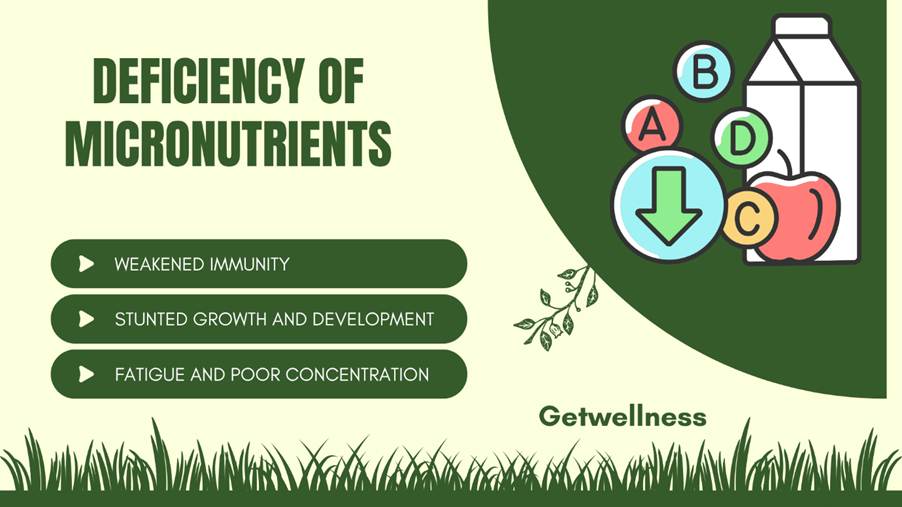
Micronutrient deficiency will lead to the disease or disorder
Iron is most important for producing the haemoglobin needed to treat anaemia; this anaemia weakens the body, leads to fatigue, and reduces immunity.
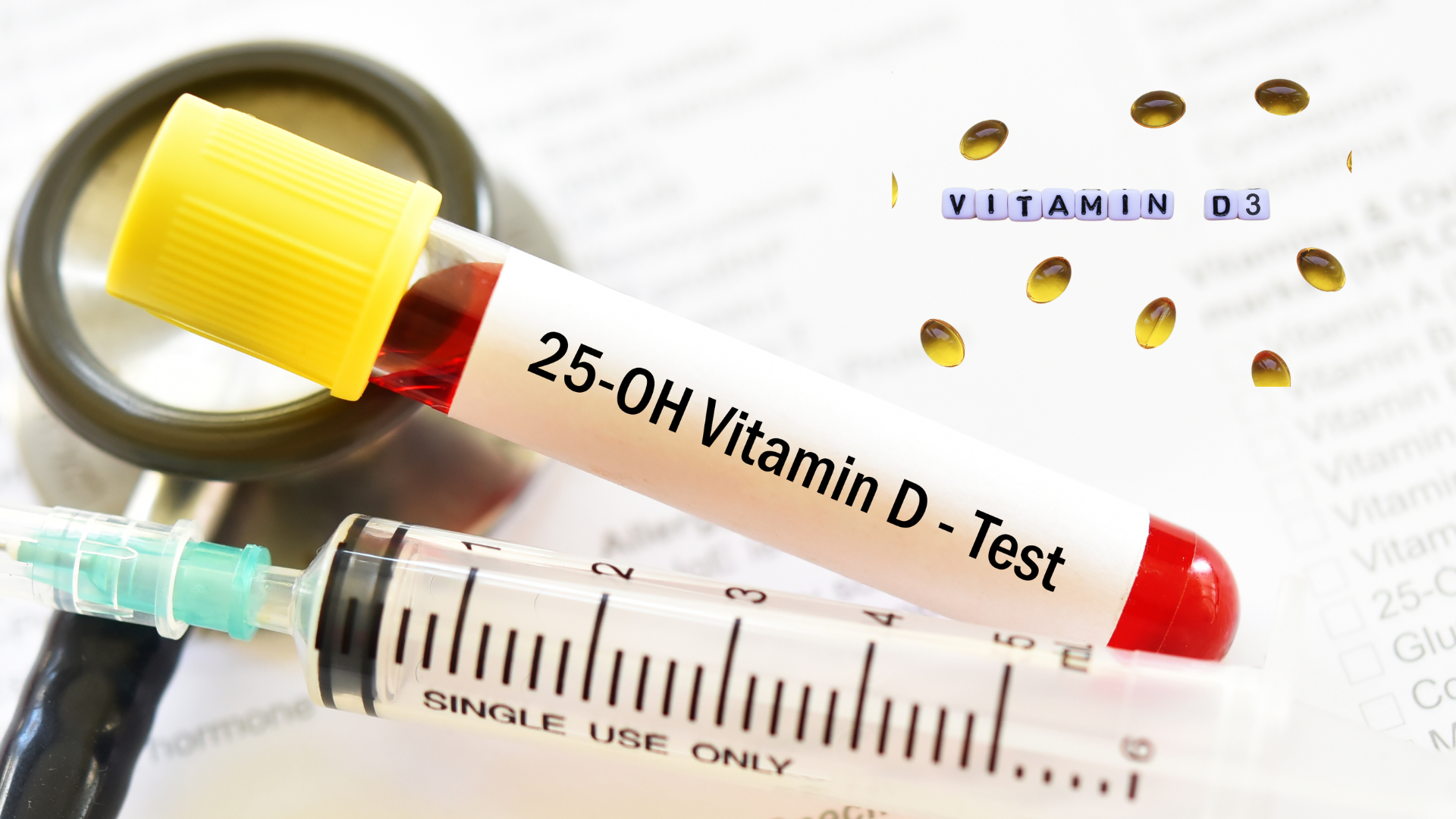
Vitamin D3 will help us from weak bones and strengthen the bones
Thyroid problems will come from an imbalance of the Iodine and affect the metabolism
Vitamin A deficiency can impair immune function and vision.
Vitamin A is another main vitamin that helps us improve immunity and vision problems.
Intake of balanced Micronutrients
balanced nutrition is a healthy sign of good health, but excess intake of nutrients leads to lethal effects; another thing is excess nutrients the body can send out through excretory systems; for example, hypervitaminosis, if vitamin D intake is higher, can lead to lethal effect, if you take Vitamin A higher amounts can leads to the liver damage and also skeletal bones abnormalities
In what way are micronutrients needed?
Supplementation is essential in case of nutritional deficiency because disease or disorder can happen due to some nutritional deficiencies; vitamin A deficiencies cause vision problems, vitamin D3 deficiency causes bone abnormalities, and calcium and phosphorus deficiencies cause bone mineral density imbalance, which may lead to osteoporosis or osteoclasts. Supplementation can be taken with the advice of healthcare professionals like doctors, dieticians, and nutritionists.
Conclusion:
Understanding and managing a healthy lifestyle of nutrient intake is crucial for adapting. For this, there needs to be some understanding of nutritional facts. Also, supplementation helps to replace the deficiency, not for continued consumption. Before taking supplementation, one needs to consult a nutritional expert, and for a healthy lifestyle and diet plan, one needs to consult a dietician or nutritionist.
References:
1. Adrian F Gombart, Adeline Pierre, A Review of Micronutrients and the Immune System–Working in Harmony to Reduce the Risk of Infection, Nutrients. 2020 Jan 16;12(1):236. doi: 10.3390/nu12010236
2. Lindsay H. Allen, Ph.D. , Micronutrients — Assessment, Requirements, Deficiencies, and Interventions, N Engl J Med 2025;392:1006-1016, DOI: 10.1056/NEJMra2314150
3. Adrian F Gombart , Adeline Pierre, A Review of Micronutrients and the Immune System-Working in Harmony to Reduce the Risk of Infection, Nutrient, 2020 Jan 16;12(1):236, doi: 10.3390/nu12010236.
4. Tim J van den Broek, Bas H A Kremer, Marisa Marcondes Rezende, The impact of micronutrient status on health: correlation network analysis to understand the role of micronutrients in metabolic-inflammatory processes regulating homeostasis and phenotypic flexibility, Genes Nutr. 2017 Feb 8;12:5. doi: 10.1186/s12263-017-0553-7.
5. Simone Passarelli, PhDa,d,† simoneapassarelli@gmail.com ∙ Christopher M Free, PhD